Students often spend long hours studying, attending classes, and preparing for exams. To stay focused and retain information effectively, the brain needs a steady supply of nutrients. While good study habits and enough sleep are essential, eating the right foods can also improve concentration, memory, and overall cognitive performance.
Here are some of the best brain foods that students can include in their daily diet.
1. Eggs
Eggs are rich in protein and contain choline, a nutrient that helps produce acetylcholine, a neurotransmitter involved in memory and learning. They also provide B vitamins that support healthy brain function.
Best way to eat: Boiled, scrambled, or as part of a healthy breakfast.
2. Blueberries
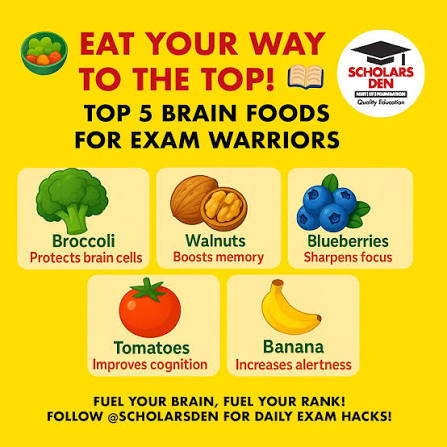
Blueberries are packed with antioxidants that protect brain cells from oxidative stress. Studies suggest they may improve memory and support communication between brain cells.
Best way to eat: Add them to yogurt, oatmeal, or smoothies.
3. Fatty Fish
Salmon, sardines, tuna, and mackerel are excellent sources of omega-3 fatty acids. These healthy fats are important for brain development, concentration, and long-term cognitive health.
Best way to eat: Grilled or baked two to three times per week.
4. Nuts and Seeds
Walnuts, almonds, pumpkin seeds, and sunflower seeds provide healthy fats, vitamin E, magnesium, and zinc. These nutrients help improve memory, focus, and overall brain performance.
Best way to eat: A small handful as a healthy snack.
5. Dark Chocolate
Dark chocolate contains flavonoids and a small amount of caffeine, which may increase alertness and improve focus. Choose chocolate with at least 70% cocoa and enjoy it in moderation.
Best way to eat: One or two small squares during study breaks.
6. Leafy Green Vegetables
Spinach, kale, and broccoli are rich in vitamins K, C, folate, and antioxidants that support brain health and help protect brain cells.
Best way to eat: In salads, soups, or stir-fries.
7. Whole Grains
Whole grains such as oats, brown rice, and whole wheat bread provide slow-releasing carbohydrates. This helps maintain stable blood sugar levels and provides the brain with a steady source of energy.
Best way to eat: Whole-grain toast or oatmeal for breakfast.
8. Yogurt
Yogurt contains protein, calcium, and probiotics that support gut health. A healthy digestive system may positively influence brain function through the gut-brain connection.
Best way to eat: Plain yogurt with fresh fruit and nuts.
9. Oranges
Vitamin C is a powerful antioxidant that helps protect brain cells from damage. One medium orange provides most of the daily recommended intake of vitamin C.
Best way to eat: Fresh as a snack or in fruit salads.
10. Avocados
Avocados contain healthy monounsaturated fats that support healthy blood circulation, helping deliver oxygen and nutrients to the brain.
Best way to eat: On whole-grain toast or in salads.
11. Bananas
Bananas provide natural sugars, potassium, and vitamin B6, making them a great source of quick energy before studying or taking an exam.
Best way to eat: As a convenient snack or blended into smoothies.
12. Green Tea
Green tea contains caffeine and L-theanine, which work together to improve alertness while promoting calmness and focus. It is an excellent alternative to sugary energy drinks.
Best way to drink: One to two cups daily without excessive sugar.
Healthy Eating Tips for Students
Along with eating brain-friendly foods, students should develop healthy habits to improve academic performance:
- Eat a balanced breakfast every morning.
- Stay hydrated by drinking plenty of water.
- Limit sugary snacks and soft drinks.
- Include fruits and vegetables in daily meals.
- Avoid skipping meals during exam periods.
- Get at least 7–9 hours of quality sleep each night.
- Exercise regularly to improve blood flow to the brain.
Conclusion
There is no single “superfood” that guarantees better grades, but a healthy diet can help support memory, concentration, and overall brain function. Foods like eggs, fatty fish, blueberries, nuts, whole grains, leafy greens, and yogurt provide essential nutrients that fuel the brain and improve learning. When combined with regular exercise, quality sleep, and effective study habits, these brain foods can help students perform at their best both in the classroom and during exams.