Your brain is like a muscle—the more you care for it, the better it performs. Healthy daily habits can improve memory, concentration, problem-solving skills, and overall cognitive function. While aging naturally affects the brain, adopting a brain-friendly lifestyle can help maintain mental sharpness and support long-term brain health.
Here are 12 daily habits that can help keep your brain active and healthy.
1. Eat a Balanced Diet
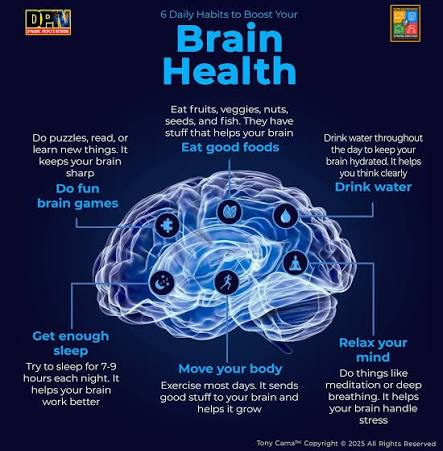
A nutritious diet provides the vitamins, minerals, healthy fats, and antioxidants your brain needs to function properly. Include foods such as fatty fish, leafy green vegetables, berries, nuts, whole grains, eggs, and fruits in your meals.
Limiting highly processed foods and added sugars can also help support steady energy levels and overall health.
2. Stay Physically Active
Regular exercise increases blood flow to the brain, delivering oxygen and nutrients that support healthy brain cells. Physical activity may also improve mood, memory, and concentration.
Aim for at least 150 minutes of moderate exercise each week, such as brisk walking, cycling, or swimming.
3. Get Enough Sleep
Sleep is essential for learning and memory. During sleep, the brain processes information, forms memories, and removes waste products that build up throughout the day.
Most adults should aim for 7–9 hours of quality sleep each night.
4. Stay Hydrated
Even mild dehydration can affect concentration, memory, and mood. Drinking enough water throughout the day helps your brain function efficiently.
Carry a reusable water bottle and drink water regularly, especially during hot weather or physical activity.
5. Keep Learning
Learning new skills challenges your brain and strengthens neural connections. Reading books, taking online courses, learning a new language, or practicing a musical instrument are excellent ways to keep your mind active.
Lifelong learning helps support cognitive function at every age.
6. Exercise Your Brain
Mental activities stimulate different parts of the brain and encourage problem-solving skills.
Try activities such as:
- Crossword puzzles
- Sudoku
- Chess
- Memory games
- Reading
- Strategy games
These exercises can improve focus and mental flexibility.
7. Manage Stress
Long-term stress can make it harder to concentrate and remember information. Finding healthy ways to relax supports both mental and physical well-being.
Helpful stress-management techniques include:
- Deep breathing
- Meditation
- Yoga
- Spending time outdoors
- Listening to music
8. Spend Time with Others
Regular social interaction keeps your brain engaged and supports emotional well-being. Talking with family, friends, or colleagues encourages communication, problem-solving, and memory.
Even a short daily conversation can help stimulate the mind.
9. Avoid Smoking and Limit Alcohol
Smoking can damage blood vessels and reduce oxygen supply to the brain. Excessive alcohol consumption may also affect memory and cognitive function over time.
Choosing healthier lifestyle habits helps support long-term brain health.
10. Protect Your Head
Head injuries can affect memory and thinking abilities. Wear a helmet when cycling or participating in sports, and always use seat belts while driving.
Taking simple safety precautions helps reduce the risk of brain injury.
11. Maintain a Healthy Weight
A healthy weight supports heart health, and a healthy heart helps maintain good blood flow to the brain. Eating nutritious foods and staying physically active can help reduce the risk of conditions that may affect cognitive health.
12. Follow a Consistent Daily Routine
A regular routine can improve sleep quality, reduce stress, and make it easier to maintain healthy habits.
Try to:
- Wake up at the same time each day.
- Eat balanced meals on a regular schedule.
- Exercise consistently.
- Set aside time for relaxation and learning.
Small daily routines often lead to long-term health benefits.
Foods That Support Brain Health
Combine healthy habits with brain-friendly foods such as:
- Salmon and other fatty fish
- Blueberries
- Walnuts and almonds
- Eggs
- Spinach and kale
- Whole grains
- Avocados
- Green tea
These foods provide nutrients that support memory, concentration, and overall cognitive function.
Common Habits That May Affect Brain Health
To help keep your brain functioning well, try to avoid:
- Skipping sleep
- Eating excessive sugary foods
- Spending too much time sitting
- Chronic stress
- Smoking
- Excessive alcohol consumption
- Staying mentally inactive
Reducing these habits can contribute to better long-term brain health.
Conclusion
Keeping your brain sharp doesn’t require complicated routines. Healthy daily habits such as eating nutritious foods, exercising regularly, sleeping well, staying hydrated, managing stress, and challenging your mind can all support memory, focus, and overall cognitive function.
Consistency is the key. By making small, positive choices every day, you can help protect your brain, improve your mental performance, and support lifelong cognitive health.